
ALMOST
SELECTED ARTWORKS
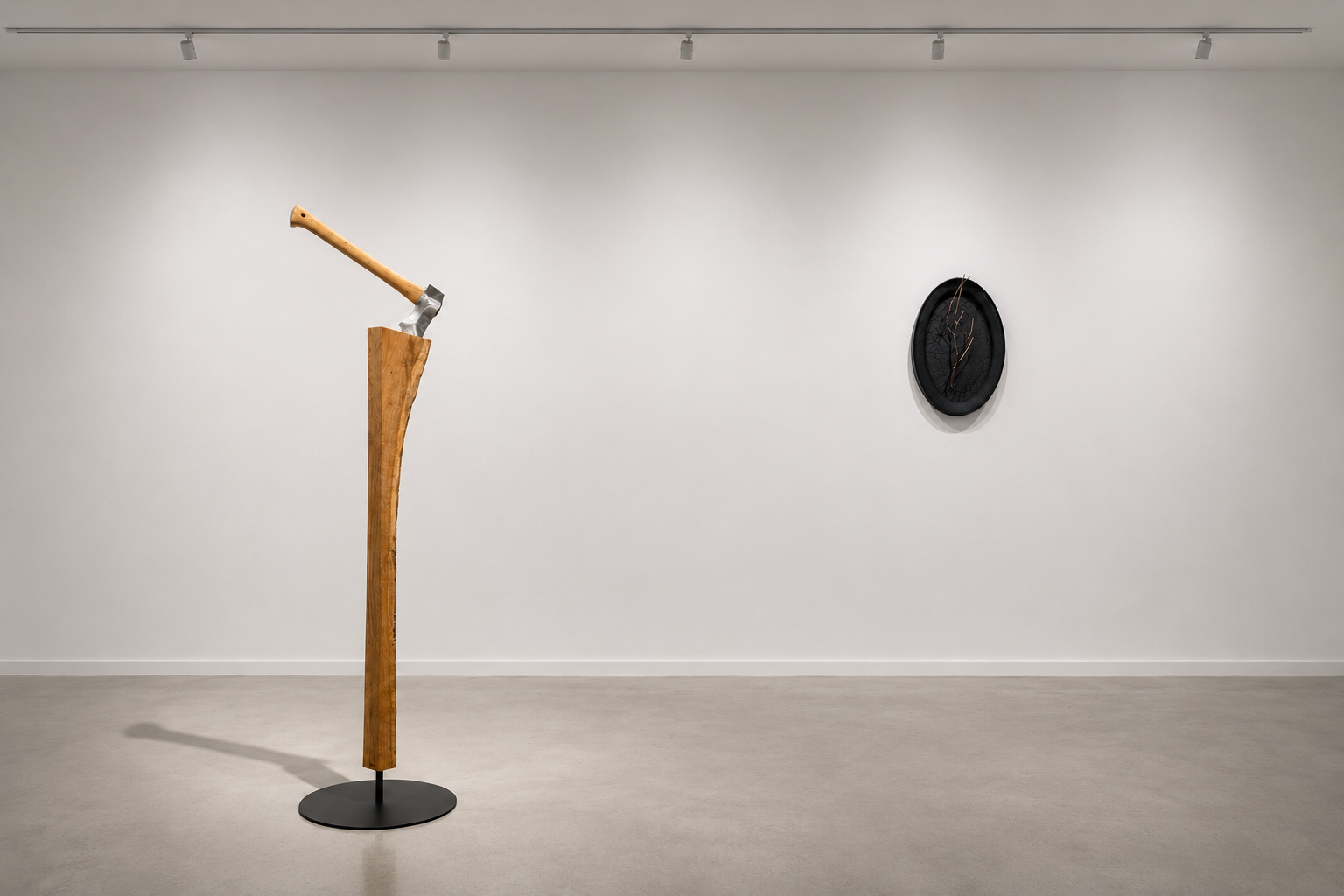
Almost brings together a group of sculptures that continue my interest in the relationship between material, tool and object. Working with found timber, driftwood, surgical instruments and hand tools, I make only enough intervention for an object to begin behaving differently. The work is not interested in disguising what these materials once were. Instead, it asks what happens when they are removed from their intended purpose and placed into another context. A tool remains recognisable as a tool, yet it no longer performs its original function. It begins to operate as sculpture. In doing so, an everyday object shifts from something valued for its utility to something encountered through attention, memory and form.
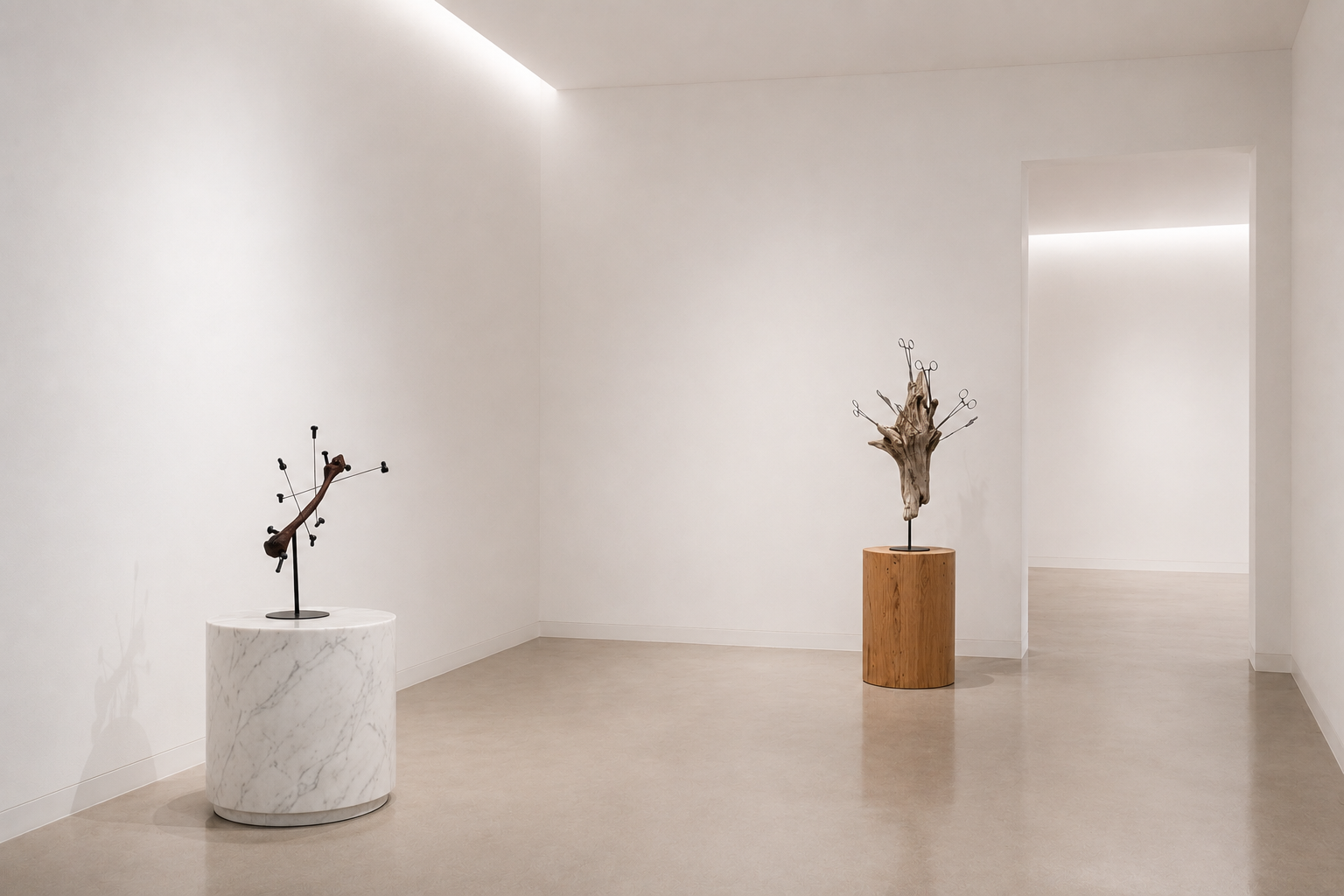
The exhibition takes its title from this state of suspension. Almost is not about incompleteness, but about the moment before meaning settles. The works occupy a space between categories without fully belonging to either. Cut / Uncut exists between opposing conditions, holding the act of making in a state that is both before and after the cut. In another work, surgical hemostats replace the branches that once grew from a piece of driftwood. They become both prosthetic growth and branches themselves. A carved wooden humerus is held together with bronze brazing rods and mechanical fasteners that borrow the language of repair while extending the form into the surrounding space. Across the exhibition, the body is rarely represented directly. Instead, it is encountered through the tools it has made. A tool extends the hand beyond the limits of the body; once removed from use and placed within sculpture, that extension no longer performs a task but invites another way of looking. The objects remain what they have always been, yet they become capable of carrying new associations without ever abandoning their original identity.
I think this body of work is less concerned with transformation than with recognition. It asks how little needs to change before we begin to see an object differently, and whether meaning resides in the object itself or in the relationships we form with it. In that sense, the works remain almost what they once were—occupying the narrow distance between function and contemplation, between the familiar and the unfamiliar, where the ordinary becomes worthy of sustained attention.